How Connecting Flight Transfers Are Coordinated
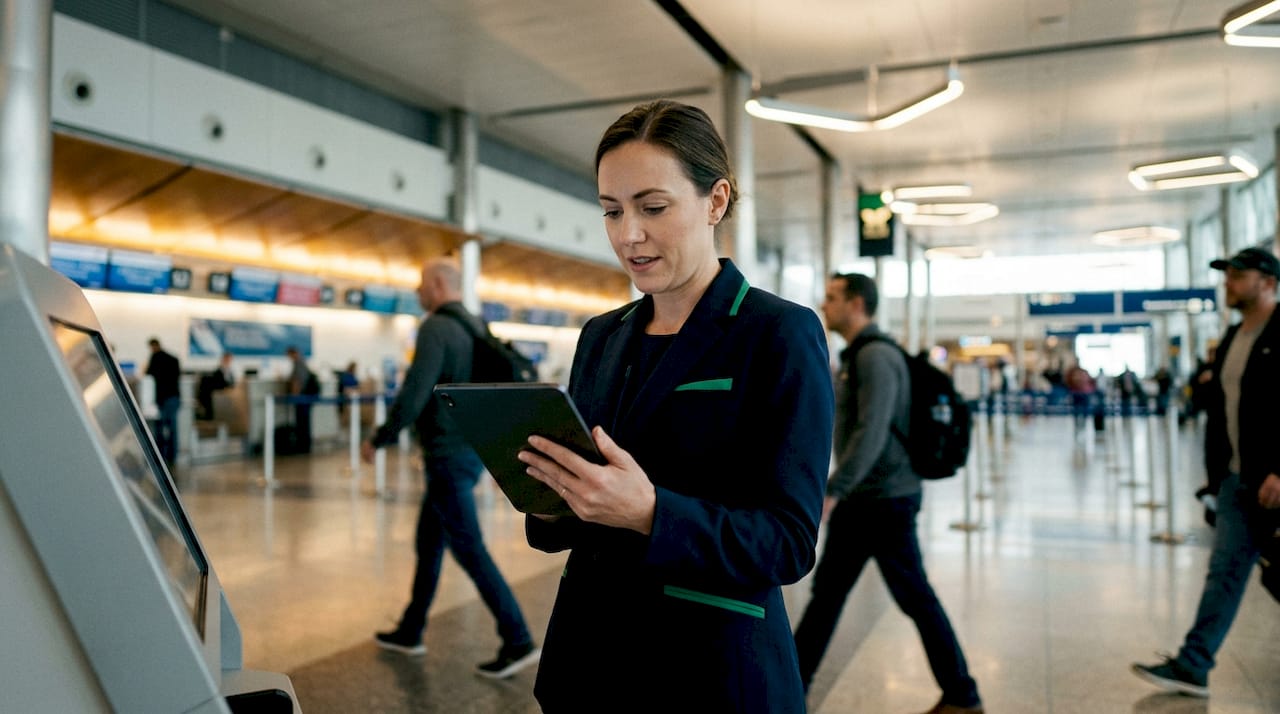
Connecting flight transfer coordination is the process by which airlines, airports, and ground systems work together to move passengers and baggage safely between two or more flights on a single trip. Understanding how connecting flight transfers are coordinated matters because the margin for error is small. Minimum Connection Times (MCT), airline alliances, baggage logistics, and terminal layouts all interact to determine whether you make your next flight or miss it. The Star Alliance Connection Centre at LAX, for example, assists over 350,000 passengers each year by actively managing tight connections. Knowing how this system works puts you in control.
How airlines and airports coordinate connecting flight transfers
Connecting flight coordination runs on two parallel tracks: the airline side and the airport side. Airlines manage schedules, gate assignments, and passenger data. Airports provide the physical infrastructure, including terminals, shuttles, and security checkpoints. When these two systems communicate well, transfers work. When they don’t, passengers get stranded.
Single-ticket vs. separate-ticket transfers
The most important factor in coordination is your ticket structure. A single-ticket itinerary means one airline or alliance has accepted responsibility for your entire journey. If your first flight is delayed and you miss the connection, the airline must rebook you at no cost. A separate-ticket itinerary shifts all financial and logistical risk to you. That distinction changes everything about how much buffer time you need and what support you can expect.
Airline alliances like Star Alliance, SkyTeam, and oneworld exist partly to extend single-ticket protection across multiple carriers. The Star Alliance Connection Centre at LAX is a concrete example of this coordination in action. Staff there monitor incoming flights, identify passengers with tight connections, and physically escort them or redirect their baggage when needed.
Baggage handling and through-check logistics
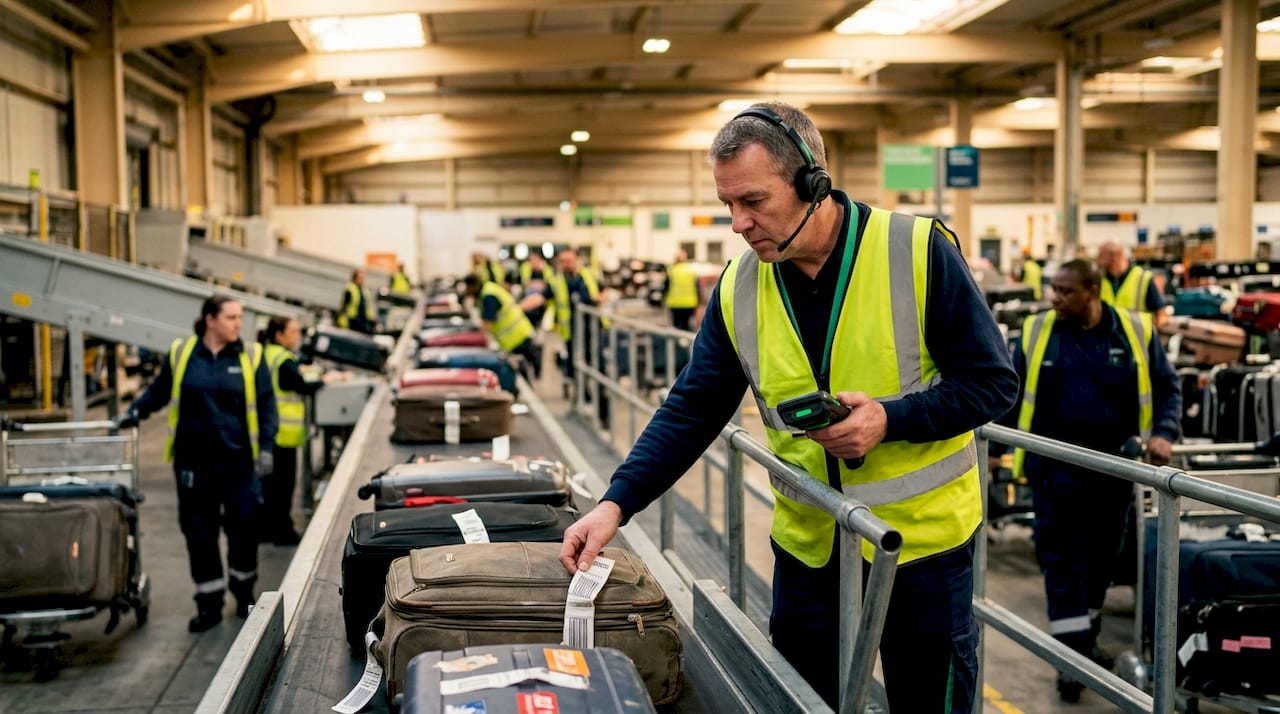
Baggage coordination is where many transfers quietly fail. On a single ticket, your bags are usually tagged to your final destination at check-in. That means the airline handles the transfer between flights without you touching your luggage. However, baggage is not always automatically tagged to the final destination, especially when the itinerary mixes airlines outside a formal alliance agreement. Always confirm at check-in that your bags are tagged all the way through.
International arrivals add another layer. In the US, passengers arriving from abroad must collect their bags, clear customs, and re-check luggage before the domestic connection. This process alone can take 60–120 minutes. Plan your layover around that reality, not around the gate distance on a map.
- Confirm through-check tagging at origin check-in for every leg.
- Ask specifically if a bag re-check is required at your connection airport.
- For international arrivals in the US, budget at least 90 minutes for customs and re-check.
- Alliance-member flights generally offer stronger baggage coordination than mixed-carrier bookings.
Pro Tip: If your itinerary mixes two airlines not in the same alliance, treat it like a separate ticket even if it was booked on one platform. Confirm baggage policy directly with each carrier before you fly.
What travelers need to know about timing and Minimum Connection Times
MCT is the legal minimum time an airline uses to sell a connecting itinerary. It is a sales standard, not an operational safety net. Industry standards recommend 1–2 hours for domestic connections, 2–3 hours for international flights, and 3–4 hours at major hubs or on self-transfer itineraries. Those figures exist because real-world transfers involve more steps than the MCT calculation accounts for.
Why MCT is not enough
MCT does not account for late-arriving aircraft, slow deplaning, or the time needed to walk between distant gates. Experts recommend adding a buffer beyond published MCT of at least 15–30 minutes for standard connections and up to 45 minutes when a terminal change is involved. That buffer is not paranoia. It is the difference between making your flight and spending the night in an airport hotel.
How to calculate your personal buffer time
| Connection type | Recommended minimum | Key time factors |
|---|---|---|
| Domestic to domestic | 1.5–2 hours | Deplaning, gate walk, boarding |
| International to domestic (US) | 2.5–3 hours | Customs, baggage re-check, TSA screening |
| International to international | 2–3 hours | Immigration, security, terminal transit |
| Self-transfer (separate tickets) | 3–4 hours | Full re-check, no airline protection |
| Large hub with terminal change | 3–4 hours | Shuttle, security re-screening, gate walk |
Terminal changes are the most underestimated factor in transfer timing. Travelers tend to judge difficulty by physical distance on an airport map. The reality is that terminal changes often require shuttles or re-screening at security, adding far more time than the map suggests. A terminal that looks close can cost you 40 minutes once you factor in the shuttle wait, the security line, and the gate walk on the other side.
Pro Tip: Search your connection airport’s official website for its terminal map before you fly. Identify whether your arriving and departing terminals are connected airside. If they are not, add at least 45 minutes to your buffer.
What steps do travelers go through during a connecting flight transfer?
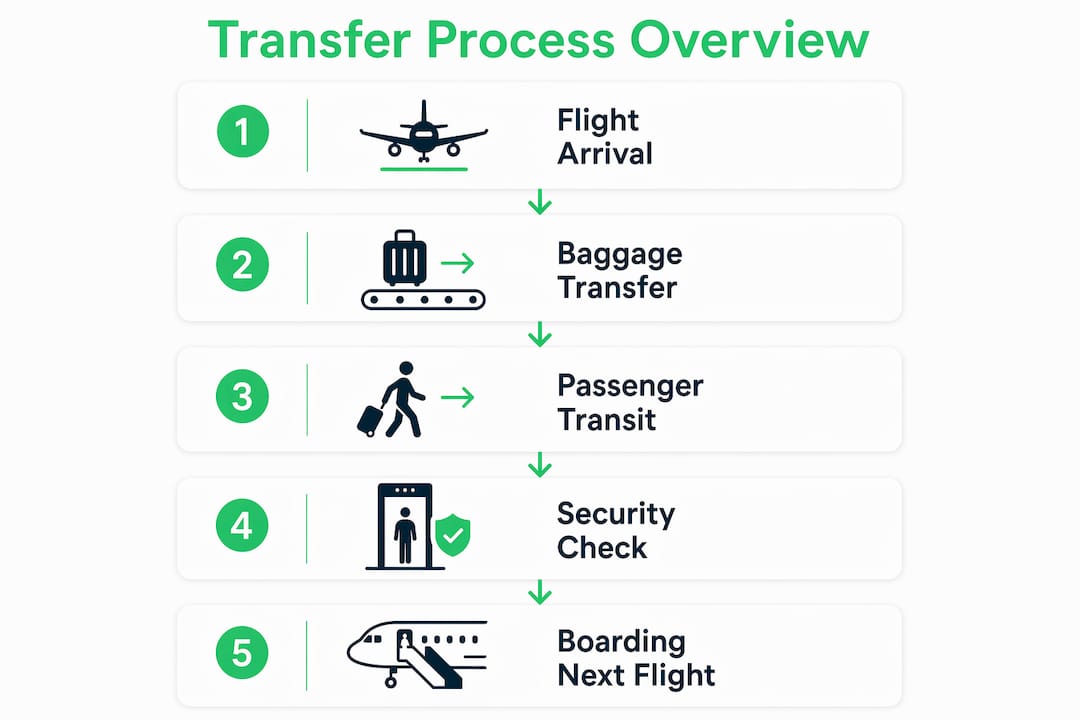
Understanding the sequence of steps in a transfer helps you move through each one without hesitation. The process varies by route type, but the core sequence is consistent.
- Deplane and check your gate. The moment you land, check the airline app or airport screens for your connecting gate. Gate assignments change, and the one printed on your boarding pass may no longer be current.
- Clear customs and immigration if required. International arrivals in the US must clear Customs and Border Protection before proceeding. This process averages 60–120 minutes and cannot be skipped or shortened by airline staff.
- Collect and re-check baggage if required. After clearing customs on an international arrival, collect your checked bags and re-check them at the designated counter before heading to security.
- Pass through security screening. Domestic-to-domestic connections in the US generally do not require a second TSA screening if terminals are connected airside. International arrivals and some unconnected terminal transfers do require re-screening.
- Navigate to your departure terminal. If a terminal change is needed, follow signs to the shuttle or train. Allow extra time for waits and the walk from the shuttle stop to your gate.
- Arrive at the gate with time to spare. Most airlines begin boarding 30–45 minutes before departure. Arriving at the gate after boarding has started risks being denied if the flight is full.
For tips on managing your bags through each of these steps, the airport transfer luggage guide from Zont Cab covers customs procedures and baggage logistics in practical detail.
How can travelers avoid missed connections?
Proactive management before and during your trip is the single most effective way to protect a connection. Waiting for problems to find you is the most common mistake frequent travelers make.
- Monitor your flight in real time. Airline apps provide real-time gate and delay updates that let you act before a problem becomes a crisis. Enable push notifications for both legs of your trip.
- Book a front seat on your first flight. Passengers seated near the front deplane 5–10 minutes faster than those in rear seats. On a tight connection, that margin is real.
- Confirm baggage policy at check-in. Ask the agent directly whether your bags are tagged to your final destination and whether you need to collect them at the connection.
- Tell the gate agent if your connection is tight. Gate agents can sometimes hold a flight for a few minutes or alert the connecting gate. They cannot help you if they don’t know you’re coming.
- Consider travel insurance for separate-ticket itineraries. When you carry the full financial risk of a missed connection, insurance is not optional. It is a cost of the ticket structure you chose.
- Use fast track transfer strategies at major hubs. Priority security lanes and fast-track programs at airports like Heathrow and Frankfurt can cut security time significantly on international connections.
For travelers managing complex logistics across multiple trips, understanding coordinated scheduling principles from other transport contexts reinforces why buffer time and confirmation steps matter in any multi-leg journey.
Key Takeaways
Connecting flight transfers succeed when travelers understand the coordination system behind them and plan with enough buffer time to absorb real-world delays.
| Point | Details |
|---|---|
| Ticket structure determines protection | Single-ticket itineraries give you airline rebooking rights; separate tickets leave all risk with you. |
| MCT is a minimum, not a recommendation | Add 15–45 minutes beyond published MCT, more for terminal changes or international arrivals. |
| International US arrivals need 60–120 minutes | Customs, baggage re-check, and TSA screening together average 60–120 minutes at US airports. |
| Terminal changes cost more time than expected | Shuttles, security re-screening, and gate walks add far more time than airport maps suggest. |
| Proactive monitoring prevents missed flights | Real-time airline app alerts and front-seat selection are the two highest-impact habits for tight connections. |
What I’ve learned from watching travelers get this wrong
The most consistent mistake I see is treating MCT as a recommendation rather than a floor. Travelers book the tightest legal connection, assume it will work, and then discover that “legal” and “realistic” are not the same thing. An airline can sell you a 45-minute connection at a major hub. That does not mean 45 minutes is enough.
The second mistake is underestimating terminal changes. I have watched travelers sprint through an airport because they assumed two terminals were a short walk apart. They had checked the map. What the map did not show was the shuttle wait, the security queue on the other side, and the 10-minute walk from the security exit to the gate. The airport lounge and terminal transfer guide from Zont Cab is one of the better resources I have seen for understanding how terminal transit actually works at major European hubs.
My honest advice: book conservatively, confirm everything at check-in, and treat your connection time as a resource to protect, not a gap to minimize. The travelers who consistently make their connections are not lucky. They plan with a realistic picture of what the transfer actually involves.
— Arthur
Reliable ground transfers for every connection
When your flight lands, the coordination does not stop at the gate. Getting between terminals, to a hotel during a long layover, or to a second airport in the same city requires the same level of planning as the flight itself.

Zont Cab provides airport transfers across Europe in over 120 cities, with fixed pricing, real-time flight tracking, and meet-and-greet service at the arrivals hall. If your inbound flight is delayed, Zont Cab monitors it and adjusts your pickup automatically. With a 4.5-star rating from verified TripAdvisor reviews and over 50,000 completed trips, the service is built for travelers who cannot afford to leave the ground leg of their journey to chance.
FAQ
What is Minimum Connection Time (MCT)?
MCT is the shortest time an airline uses to legally sell a connecting itinerary at a given airport. It is a sales standard, not a safety buffer, and real-world transfers typically require more time.
Do I need to go through security again on a connecting flight?
Domestic-to-domestic connections in the US generally do not require a second TSA screening if terminals are connected airside. International arrivals and unconnected terminal transfers usually do require re-screening.
How long does a US customs process take on an international connection?
Clearing Customs and Border Protection, collecting baggage, and completing TSA re-screening averages 60–120 minutes at US airports. Budget at least 90 minutes to be safe.
What happens to my bags on a connecting flight?
On a single-ticket itinerary, bags are usually tagged to your final destination. On separate tickets or mixed-carrier bookings, you may need to collect and re-check your bags at the connection airport. Always confirm at check-in.
How much time should I allow for a connection with a terminal change?
Allow at least 3 hours when a terminal change is involved. Shuttles, security re-screening, and the gate walk on the other side consistently take longer than travelers expect.