How Transfers Handle Delayed Arrivals in 2026
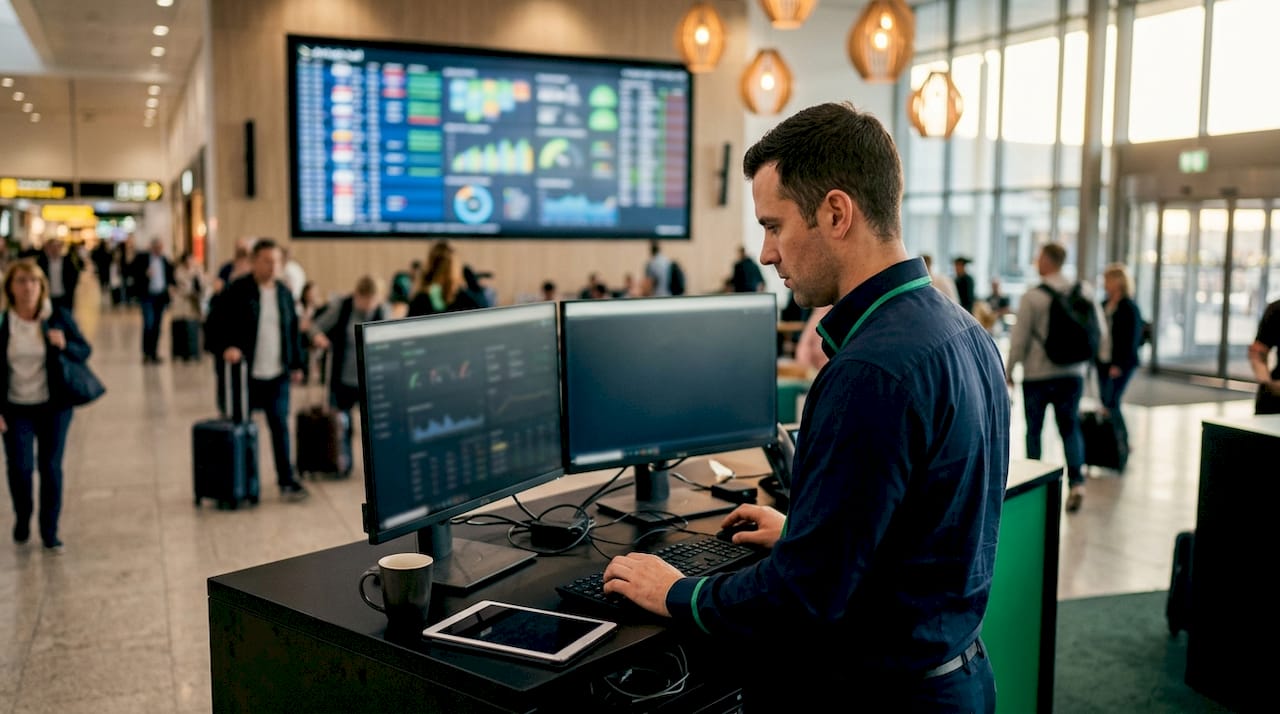
Airport transfer services handle delayed arrivals by monitoring flights in real time and automatically adjusting driver dispatch to match actual landing times. Nearly one in four domestic flights ran late in 2025, which means transfer services that rely on scheduled clock times alone fail a significant share of their passengers. The best providers build two layers of protection into every booking: live flight tracking and a built-in buffer for customs and baggage claim. Understanding how that system works, and what you need to do on your end, is the difference between a smooth pickup and a stressful scramble.
How transfers handle delayed arrivals: the technology behind it
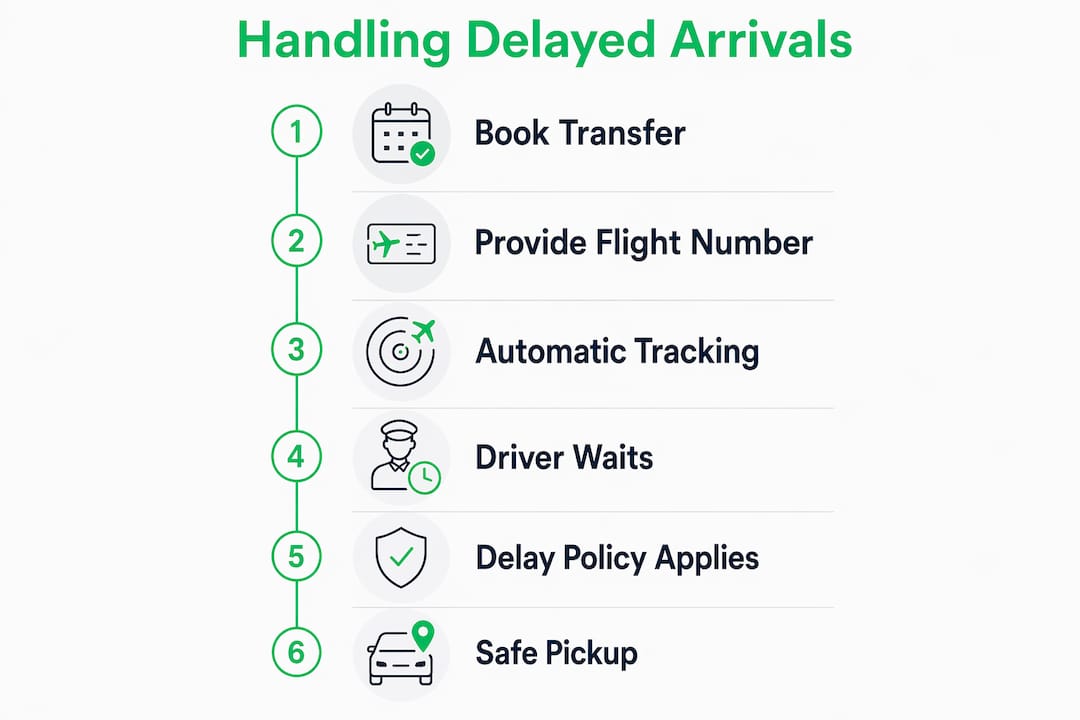
Professional transfer services connect your flight number directly to live aviation data. That single data point is the engine behind every automatic adjustment. When your flight pushes back its arrival by 45 minutes, the dispatch system updates the driver’s schedule without anyone making a phone call.
The flight number, not the scheduled time, is the critical booking detail. A scheduled arrival time is a starting estimate. The flight number links the booking to a live data feed that updates continuously as the flight progresses. Providers that only record your scheduled arrival time have no mechanism to react when that time changes.
Reliable dispatch systems also cross-reference multiple aviation data sources to confirm flight status before adjusting a pickup. A single data feed can produce errors, particularly during high-traffic periods or weather events. Cross-checking reduces false adjustments that would send a driver to the wrong terminal at the wrong time.
- Live flight data integration: The booking system pulls status updates directly from aviation databases, updating driver schedules automatically.
- Buffer time calculation: Beyond the landing time, dispatch adds time for deplaning, customs, and baggage claim. Most providers factor in 30–60 minutes of airport processing time on top of the actual landing.
- Multi-source verification: Dispatch confirms flight status across more than one data source before triggering a schedule change.
- Automatic driver repositioning: Drivers receive updated arrival windows on their devices without needing passenger confirmation.
Pro Tip: Always provide your flight number, not just the arrival time, when booking any transfer. Without it, the service cannot link your booking to live data and will default to your original scheduled time.
How do providers handle different lengths of flight delays?
The length of a delay determines which part of a provider’s policy kicks in. Short delays of 30 minutes or less are typically absorbed invisibly. The driver adjusts, the passenger lands, and the pickup happens without any extra steps. Longer delays require more active coordination.

Most reputable private transfer services include a 30–60 minute complimentary wait time after your flight actually lands. That window covers the time you need to clear customs and collect luggage. Charges typically begin only after that free period expires.
Multi-hour delays create a different situation. When a flight is delayed by two hours or more, many providers will release the driver temporarily and reassign them closer to the updated arrival time. This is standard practice, not a service failure. The key is that the system tracks the updated ETA and re-dispatches accordingly.
Overnight delays are the exception that requires direct communication. If your flight is canceled or pushed to the following day, you need to contact your provider directly to reschedule. Automated tracking handles delays within the same travel day, but a full cancellation falls outside what any tracking system can resolve on its own.
- Short delay (under 30 minutes): Absorbed automatically. No action needed from you.
- Moderate delay (30 minutes to 2 hours): Driver adjusts to updated ETA. Complimentary wait time applies after landing.
- Long delay (2 to 5 hours): Provider may temporarily release the driver and redispatch closer to the new arrival. Confirm this policy before booking.
- Overnight or canceled flight: Contact the provider directly to reschedule. Tracking systems do not handle full cancellations automatically.
Pro Tip: Ask your provider for their written delay policy before you travel. Hidden charges after complimentary wait periods are the most common source of surprise fees in airport transfers.
What should travelers do to ensure smooth transfers despite delays?
Your transfer service does most of the work, but a few actions on your part make the system work better. The biggest one is simple: provide your flight number at booking and confirm it is recorded correctly.
- Confirm your flight number is in the booking: Check your confirmation email. If the flight number is missing, contact the provider before you travel.
- Monitor your own flight status: Use your airline’s app or a flight tracking service to follow updates. Combining airline push notifications with provider tracking adds a second layer of reliability.
- Read the delay policy before you book: Know exactly how long the free wait period lasts and what charges apply after it. This is especially relevant for international arrivals, where customs processing times vary widely.
- Contact the provider for delays over three hours: For very long delays, a direct message or call confirms that the provider has the correct updated ETA and has adjusted the booking accordingly.
- Keep your contact details current: Drivers and dispatchers need a working phone number to reach you if something changes on the ground.
Pre-booking your transfer is itself a form of delay protection. Services that handle delays proactively are built around the assumption that your scheduled arrival time will change. On-demand services have no mechanism to prepare for a delay they do not know about.
Pro Tip: Screenshot your booking confirmation and the provider’s delay policy before you board. If you land in a foreign airport with limited data, you will have everything you need offline.
Automatic tracking versus manual coordination: which approach works better?
The gap between transfer services that track flights automatically and those that rely on passengers to report delays is significant. Automated dispatch monitoring reduces human error and removes the burden of coordination from the traveler entirely.
| Approach | How it works | Traveler effort required | Risk level |
|---|---|---|---|
| Automatic flight tracking | System monitors live data and adjusts driver dispatch | None for standard delays | Low |
| Passenger-initiated updates | Traveler calls or messages provider when delay occurs | High, especially mid-flight | Medium to high |
| Scheduled clock time only | Driver arrives at original booking time regardless of delay | High, often results in missed pickup | High |
| Hybrid (tracking plus passenger confirmation) | System tracks flight, passenger confirms for long delays | Low for short delays, moderate for long ones | Low to medium |
Services that rely on scheduled clock times without flight number integration produce the most no-shows and missed pickups. The driver arrives at the original time, waits through the free period, and leaves before the passenger lands. The traveler exits baggage claim to find no one waiting.
Automatic tracking eliminates that scenario for the vast majority of delays. The airport transfers workflow at professional services treats the flight number as a live data subscription, not a static field. That distinction is what separates reliable providers from unreliable ones.
Pricing transparency also matters here. Services with fair pricing structures publish their delay and wait time charges clearly, so you know exactly what a two-hour delay will cost before you book. Opaque pricing is a signal that the delay policy may also be unclear.
Key Takeaways
Professional transfer services that use automatic flight tracking and documented delay policies deliver reliable pickups regardless of how late your flight runs.
| Point | Details |
|---|---|
| Flight number is mandatory | Always provide your flight number at booking so the service can link to live aviation data. |
| Free wait time is standard | Most reputable providers include 30–60 minutes of complimentary waiting after actual landing. |
| Automatic tracking beats manual calls | Services that track flights automatically reduce no-shows and remove coordination burden from travelers. |
| Long delays need direct contact | For delays over three hours or full cancellations, contact your provider directly to reschedule. |
| Read the delay policy before booking | Written delay policies prevent surprise charges and clarify what happens at each delay length. |
What I’ve learned from years of delayed flights and transfer pickups
Most travelers assume their transfer service already knows everything it needs to know. That assumption causes more missed pickups than any actual technology failure.
The single most overlooked detail is the flight number field in the booking form. I have seen travelers fill in their arrival time and leave the flight number blank, then wonder why the driver showed up at the original time after a 90-minute delay. The tracking system had nothing to track. The driver followed the only data available, which was the original scheduled time.
The second misconception is about complimentary wait times. Travelers often assume the free waiting period starts when they land. At many providers, it starts when the flight status changes to “arrived,” which can be several minutes before the plane reaches the gate. At busy airports, that gap matters. Knowing exactly when your provider’s clock starts ticking helps you move through baggage claim with appropriate urgency.
My honest advice is to treat the delay policy conversation as part of the booking process, not an afterthought. Ask the provider two questions: “Do you track my flight automatically?” and “When does the complimentary wait time begin?” If the answers are vague, that tells you something important about how the service will perform when things go wrong. A provider that cannot answer those questions clearly has probably not built the systems to handle delays well. Choose providers with strong booking practices and documented policies. The extra five minutes of research before you book saves hours of frustration after you land.
— Arthur
Zont Cab takes the stress out of delayed arrivals
Zont Cab monitors every booking through real-time flight tracking across its network of airport transfers in Europe, covering more than 120 cities. When your flight is delayed, the system automatically adjusts your driver’s dispatch time to match your actual landing. The complimentary waiting period begins after your flight lands, not at your original scheduled arrival, so you are never penalized for a delay you did not cause.
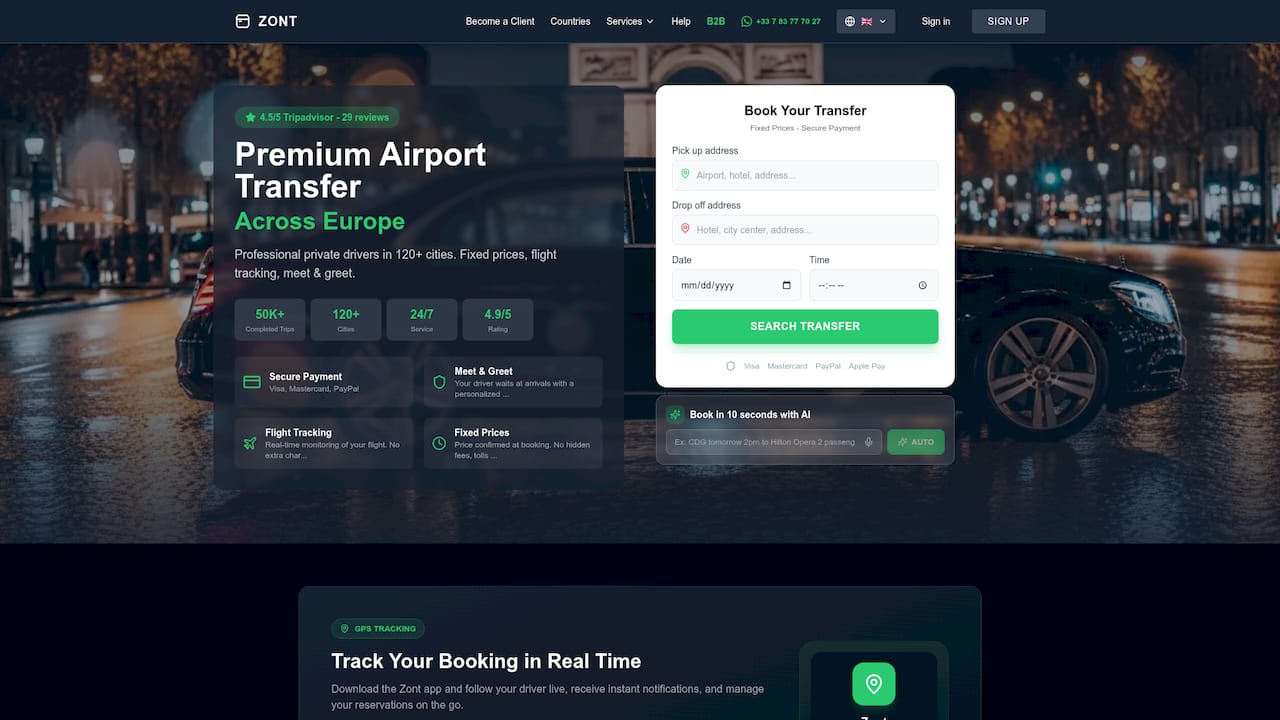
Pricing is fixed at the time of booking and does not change because your flight ran late. There are no hidden fees tied to standard delay scenarios. Zont Cab has completed over 50,000 trips and holds a 4.5-star rating from verified TripAdvisor reviews, with punctuality cited consistently as a top strength. If you want a transfer that adapts to your actual arrival rather than your planned one, Zont Cab is built for exactly that.
FAQ
How do transfer services know my flight is delayed?
Professional transfer services link your flight number to live aviation databases at booking. When your flight status updates, the system automatically adjusts the driver’s schedule without requiring you to call.
How long will my driver wait if my flight is delayed?
Most reputable private transfer services include a 30–60 minute complimentary wait time after your flight actually lands. Charges may apply after that free period ends, depending on the provider’s policy.
What should I do if my flight is canceled entirely?
Contact your transfer provider directly as soon as you know the flight is canceled. Automated tracking systems handle same-day delays but cannot reschedule a booking to a different day without human confirmation.
Do I need to call my transfer service when my flight is delayed?
For delays under two to three hours, automated flight tracking handles the adjustment without any action from you. For very long delays or cancellations, a direct call or message to your provider is the safest approach.
What is the biggest mistake travelers make with airport transfers and delays?
Leaving the flight number blank at booking is the most common error. Without a flight number, the service cannot track your flight and will default to your original scheduled arrival time, which causes missed pickups when delays occur.