Yes, You Can Pay for an Airport Transfer by Card in France
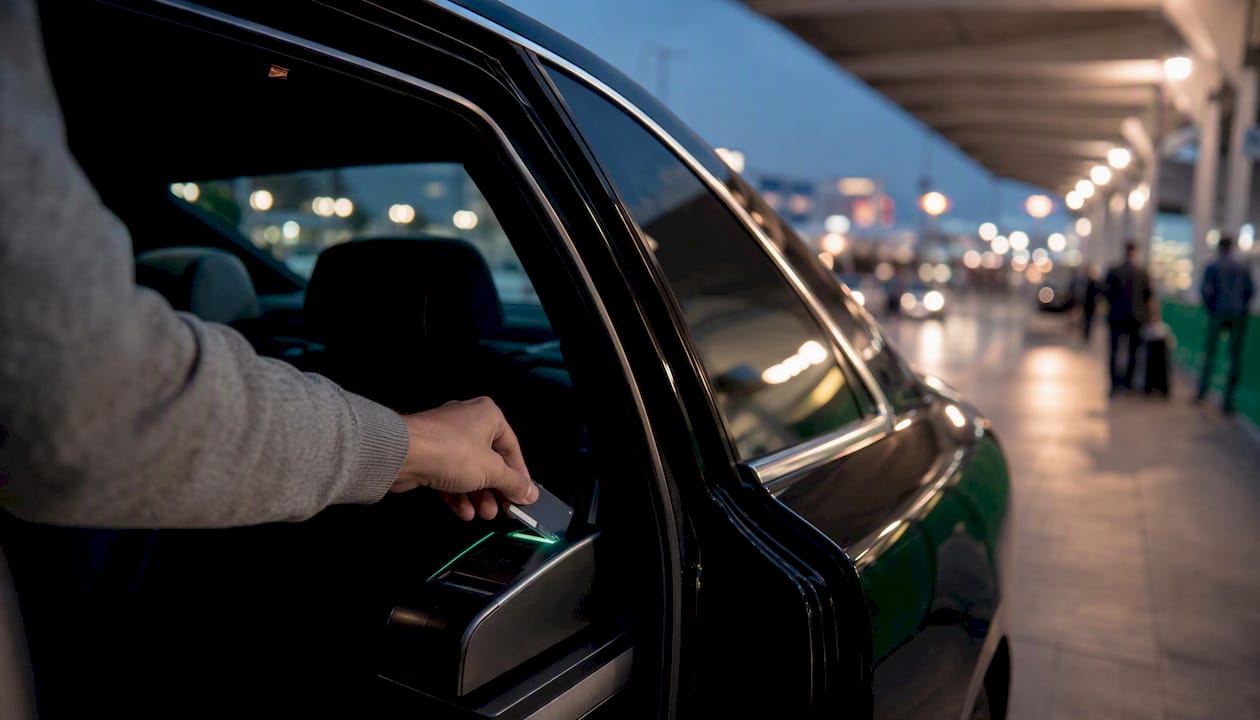
You can pay by card for an airport transfer in France. Taxis are legally required to accept bank cards regardless of the fare amount, and every prebooked transfer provider worth using lets you pay online before you even land. The real question isn’t whether card payment is allowed. It’s whether the driver’s terminal actually works when you need it to, and what you do if it doesn’t.
Here’s what to do about that, right now, before you board:
- Ask about card acceptance before you get in the vehicle, not after the ride.
- Favor a prebooked, prepaid transfer over hailing a taxi cold. It removes the terminal gamble entirely.
The legal backbone here comes straight from Service-public, which spells out taxi payment obligations, and from Legifrance, which hosts the actual decrees behind those rules. Fixed airport fares in cities like Paris, Nice, and Toulouse give you a third anchor point: a published price you can pay in advance, no haggling required.
Key Takeaways
Card payment is legally required for French taxis and standard for prebooked transfers, and prepaying online before arrival eliminates the terminal risk entirely.
| Point | Details |
|---|---|
| Card acceptance is mandatory | French taxis must accept bank cards for any fare amount, per Service-public.gouv.fr. |
| Receipts kick in at €25 | A receipt is required by law for fares of €25 TTC or more, and you can request one below that. |
| Fixed fares remove ambiguity | Published 2026 rates like — for CDG to Paris rive droite prevent meter disputes. |
| Report refusals to the prefecture | Card refusal can be reported to the prefecture or DGCCRF, and repeated cases can trigger fines. |
| Zont Cab removes the guesswork | Prepaid card checkout, fixed pricing, and flight tracking mean no terminal to test on arrival. |
Table of Contents
- How Do You Pay for an Airport Transfer in France?
- Are Taxis Legally Required to Accept Card Payments?
- What Do Fixed Airport Fares in France Actually Look Like?
- What Should You Do If a Driver Refuses Your Card?
- How Can You Avoid Card Problems Before You Even Land?
- Why Prebooking With Card Payment Solves Most of This
- Why I Tell Every Traveler to Prepay by Card
- Book a Transfer Where the Card Payment Just Works
- Where to Check the Official Rules and Fares
- Frequently Asked Questions
- Sources
How Do You Pay for an Airport Transfer in France?
Travelers landing at Charles de Gaulle, Orly, Nice, or Toulouse have five realistic ways to settle the bill. Each comes with its own trade-offs around reliability and paper trail.
- Prepay online with a card. You lock in the price before departure, and most platforms email a receipt automatically.
- Pay in the vehicle by chip or contactless card. Fast when the terminal works, but you’re at the mercy of hardware that sometimes doesn’t.
- Mobile wallets like Apple Pay or Google Pay. These ride on the same terminal infrastructure as card payments, so they carry the same risk if the machine is faulty.
- Pay through a provider’s app. Common with prebooked services, this usually stores your card securely and charges automatically at trip completion.
- Cash as backup. Still legal and often the fastest fallback, but it leaves you with no digital trail if a dispute comes up later.
Reliability tends to run in that order too. Prepaying online carries the least dispute risk because the transaction happens before you’re standing on a curb at 6 a.m. with a suitcase. In-vehicle card payment is convenient when it works, but a dead terminal is a familiar frustration for anyone who has taken a taxi from a French airport. Cash never fails technically, but it gives you nothing to point to if something goes wrong with the fare.
Pro Tip: Before you prepay for any transfer, check the provider’s cancellation and flight-delay policy. A good one adjusts pickup time automatically if your flight lands late and won’t penalize you for a delay outside your control.
Are Taxis Legally Required to Accept Card Payments?
Yes. French regulation requires taxis to accept payment by cash or bank card whatever the amount, and the payment terminal has to be present, visible, and functioning, according to Service-public.gouv.fr. Drivers can only refuse a specific payment method, like a check, if that restriction is clearly posted in the vehicle. Card refusal isn’t one of the allowed exceptions.
A receipt is mandatory for any fare of €25 or more (TTC), and you can request one for smaller amounts too. That receipt can include your name and trip details if you ask for it, which matters if you ever need to dispute a charge with your bank.
The legal texts underpinning these obligations sit in the French transport code on Legifrance, covering everything from equipment standards to sanctions for noncompliance. Enforcement isn’t just theoretical. Media coverage has documented inspections finding real noncompliance in French cities, and outlets like TF1 Info report that refusals can trigger fines and administrative sanctions against the driver.
If something feels off, here’s what backs you up:
- The obligation to accept cards applies “whatever the amount,” so a driver can’t claim a minimum fare exception.
- A missing or broken terminal doesn’t excuse the driver from finding another way to accept card payment.
- Reporting channels exist specifically for this problem, covered in detail further down.
What Do Fixed Airport Fares in France Actually Look Like?
Fixed fares take the guesswork out of airport pickups, and France publishes them by route. The 2026 update from Service Public Entreprendre lists a maximum year-over-year variation of just 1.38%, so pricing stays predictable from one year to the next.
Nice’s fares, notably, held steady from 2025 into 2026, which tells you these published rates aren’t a moving target every year.
A fixed fare covers the trip between the two designated zones at a flat rate, no meter running, no surprise supplements for the usual stuff like luggage or nighttime travel. Meter-based rides, by contrast, can accumulate extra charges depending on time of day, waiting time, or route taken, and total cost only becomes clear at drop-off. If you’re headed into Paris from Charles de Gaulle or catching a ride from Orly, knowing the fixed fare in advance means there’s nothing to negotiate curbside.
Pro Tip: A published fixed fare eliminates almost every payment dispute I’ve seen described, because there’s no ambiguity about what you owe. Combine that fixed price with a prepaid card booking and there’s genuinely nothing left to discuss at drop-off.

What Should You Do If a Driver Refuses Your Card?
Card refusal still happens, despite the legal requirement. If it does, work through these steps in order:
- Stay calm and ask to see the terminal. Sometimes it’s genuinely broken; sometimes the driver just prefers cash and is testing whether you’ll push back.
- Request a receipt or a written note, even if you end up paying cash. Ask that it include the driver’s details and the fare amount.
- Photograph the terminal and the vehicle’s license plate. This single step does more for a later dispute than almost anything else you can do.
- Offer a workaround (mobile wallet, a different card) while telling the driver you intend to report the refusal.
- File a report afterward with the prefecture or the DGCCRF, which handles consumer protection complaints. Local police can also take a statement if the situation escalated.
Administrative follow-up on these reports typically starts with the prefecture issuing a compliance order to the driver or company, according to TF1 Info, with fines or sanctions reserved for repeated or severe noncompliance.
Pro Tip: If a charge posts incorrectly on your card after the fact, that timestamped photo of the terminal and your booking confirmation are exactly what your bank will ask for when you file a chargeback. Keep both, don’t just delete them after the trip.
How Can You Avoid Card Problems Before You Even Land?
A few minutes of prep before departure solves most of what goes wrong at the curb.
- Notify your bank about international travel so a legitimate charge doesn’t get flagged as suspicious.
- Carry a backup card from a different bank or network in case one gets declined.
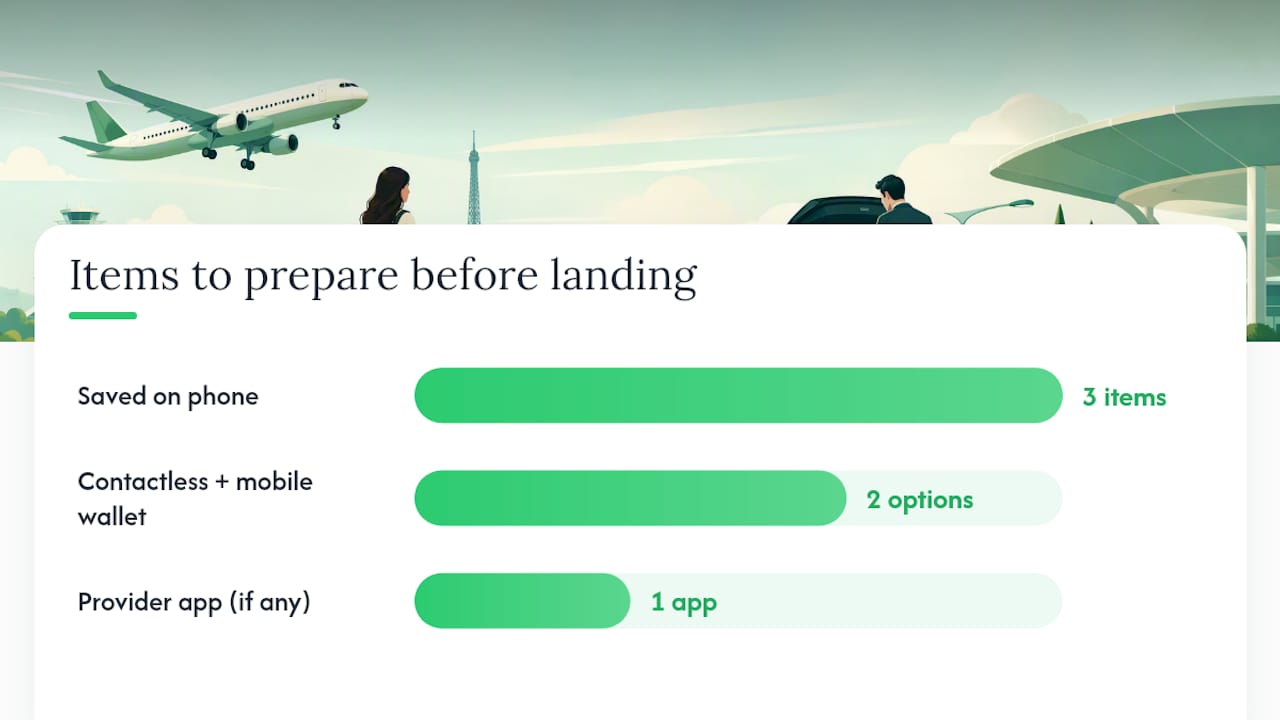
- Enable contactless payment and set up a mobile wallet as a second option.
- Screenshot your booking confirmation and any receipt before you lose signal.
- Confirm in advance that your chosen provider accepts card payment, ideally by prepaying online.
- Download the provider’s app if one exists, since it usually stores payment details securely for the whole trip.
Keep three things saved on your phone before you land: your booking reference, a screenshot of your receipt, and the driver’s plate number once you have it. That’s the full evidence trail you’d need for a dispute.
Pro Tip: Carry a small amount of euros anyway. Not for the fare itself, but for tipping or small incidentals where a card reader feels like overkill.
Here’s the practical bottom line distilled into one table:
| Preparation Step | Why It Matters |
|---|---|
| Notify your bank before travel | Prevents a legitimate charge from being blocked as fraud |
| Carry a backup card | Gives you a second option if the primary card is declined |
| Screenshot your booking and receipt | Creates evidence you can use for a dispute or refund |
| Confirm card acceptance in advance | Avoids relying on an in-vehicle terminal that might fail |
Why Prebooking With Card Payment Solves Most of This
The single biggest lever you have is deciding how you pay before you ever set foot in the vehicle. Zont Cab structures its airport transfer bookings around exactly that principle: you pay by card online, at a fixed price, before the trip happens.
- Secure card checkout at booking, so there’s no terminal to test and no ambiguity about the amount.
- Fixed pricing set in advance, meaning what you see at booking is what you pay, with no meter surprises.
- Real-time flight tracking that adjusts your pickup time automatically if your flight is delayed.
- Meet and greet service so your driver is waiting with your name, not circling the arrivals hall.
- Clear digital receipts issued automatically, which matters if you ever need to reconcile the charge with your bank.
Prebooking with a provider that supports card prepayment removes the need to test an in-vehicle terminal at arrival, and it simplifies refunds and disputes if your flight changes at the last minute.
Zont Cab operates in more than 120 cities across Europe, including dedicated coverage for Paris, Nice, and Beauvais, with multilingual support available if you’d rather not sort out a payment dispute in your second language at 5 a.m.
Pro Tip: If you’re booking for a group or planning multiple pickups during a trip, keep every booking confirmation in one place. It makes reconciling receipts far simpler if you need to check charges later.
Why I Tell Every Traveler to Prepay by Card
The gap between what the law promises and what actually happens on the ground is where most travelers get burned. French regulation is clear: taxis must accept cards, full stop, whatever the fare. But regulation doesn’t fix a broken terminal at 11 p.m. outside Terminal 2E, and it doesn’t help you argue with a driver who’s decided cash is easier for him tonight.
That gap is exactly why prepaying online, before you land, isn’t just a convenience. It’s a way of sidestepping a problem entirely instead of solving it after the fact. A fixed fare paid in advance means there’s no meter to argue about and no terminal to fail. If your flight gets delayed, a service tracking that flight adjusts without you lifting a finger. The paperwork trail, a digital receipt tied to a specific booking, is exactly what you’d want in hand if a dispute ever came up. None of that requires optimism about how the trip will go. It just requires deciding how you’ll pay before you’re standing at baggage claim.
Book a Transfer Where the Card Payment Just Works
Zont Cab is the alternative to rolling the dice on a taxi terminal after a long flight: you pay securely by card when you book, at a price that’s fixed before you land, and the driver is already tracking your flight if it runs late. No standing at the curb wondering whether the machine works, no cash scramble, no note-to-self to dispute a charge later.
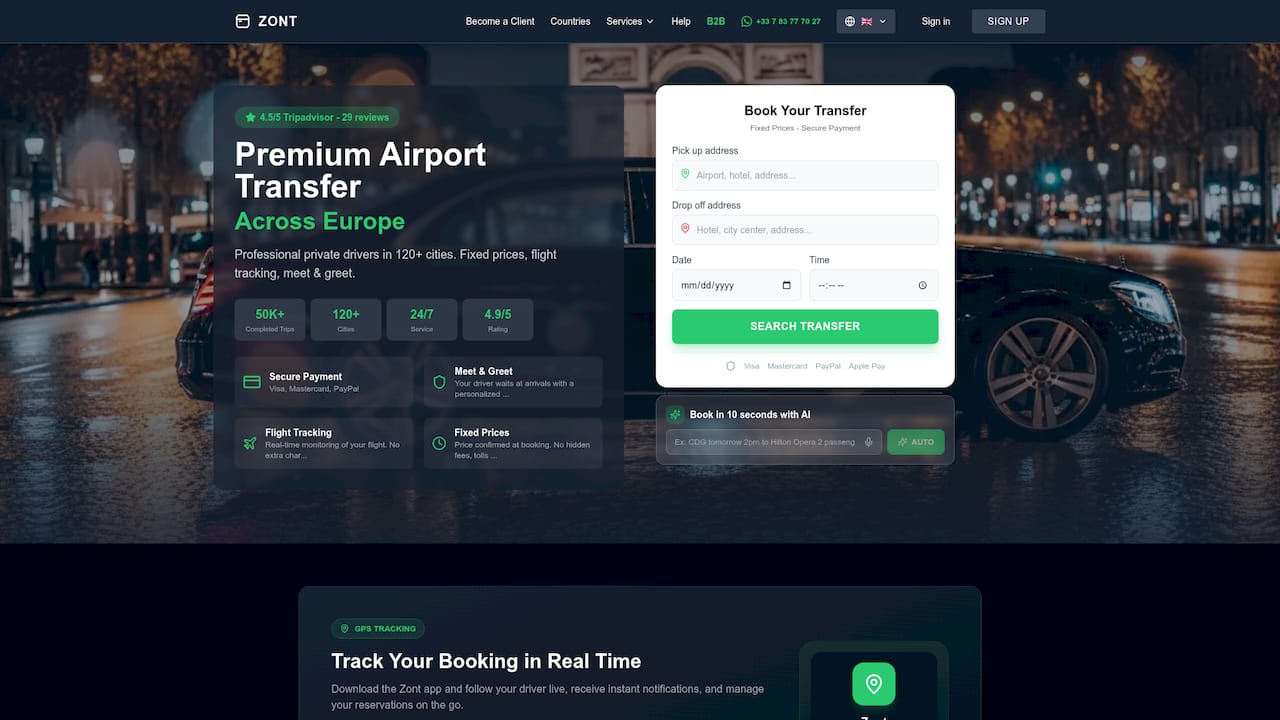
Every booking includes real-time flight updates, a meet and greet at arrivals, and multilingual support if anything needs sorting out mid-trip. Coverage spans 120+ cities across Europe, with dedicated options for major French routes including Paris–Charles de Gaulle. If you’re traveling with a group, the Mercedes V-Class handles up to seven passengers at a fixed hourly rate.
Check your route and lock in your fare now at Zont Cab, before your flight, while the price and the payment method are both still entirely in your hands.
Where to Check the Official Rules and Fares
- Service-public covers legal requirements around card acceptance, terminals, and receipts.
- Service Public Entreprendre’s 2026 fare update lists the current fixed fares for Paris, Nice, Toulouse, and other cities.
- Legifrance’s transport code references hold the underlying legal texts behind taxi equipment and payment rules.
- TF1 Info’s guide on card refusals explains reporting channels and what happens after you file a complaint.
- For general best practices on prepaid transfers, easyTransfer’s guide to fixed-price airport transfers offers useful background on how fixed pricing protects travelers.
Frequently Asked Questions
Can I pay for an airport transfer by card in France? Yes. Taxis are legally required to accept card payment for any fare amount, and prebooked transfer services almost universally offer online card payment before the trip even starts.
What happens if a taxi driver says the card terminal is broken? Ask to see the terminal, request a written note of the fare, and photograph the vehicle’s plate number. Offer an alternative like a mobile wallet, then report the refusal to the prefecture or DGCCRF afterward.
Do I need a receipt for an airport transfer? Yes, for any fare of €25 TTC or more, a receipt is mandatory under French law. You can also request one for smaller amounts, and it can include your name and trip details on request.
Are fixed airport fares cheaper than metered fares? It depends on the route and time of day, but fixed fares remove the uncertainty. You know the price before you leave home, which is often the bigger advantage over a small cost difference.
Is it safer to prepay online than to pay in the vehicle? Prepaying removes the risk of a broken terminal or a driver disputing the payment method entirely. It also gives you a digital receipt tied to your booking, which is useful if you ever need to dispute a charge.
Sources
- Taxis : quels sont les tarifs, les dispositifs et les obligations d’affichage et commerciales ? | Service-public
- Forfaits taxis -Taxis : les tarifs applicables en 2026 | Service Public Entreprendre
- What to do if your taxi refuses card payment | TF1 Info
- Legifrance — Official journal / decree reference