Why Private Transfers Are Safer Than Rideshares

Private transfers are safer than rideshares because they combine fingerprint-based background checks, commercial insurance starting at $1.5 million, professionally trained chauffeurs, and mandatory vehicle maintenance into a single accountable system. Rideshare platforms, by contrast, rely on independent contractors driving personal vehicles, with background checks that use name-based databases and limited lookback periods. The gap between these two models is not a matter of preference. It is a documented safety difference backed by federal data.
Here is what that difference looks like in practice:
- Driver vetting: Professional chauffeurs submit to FBI fingerprint checks, DOT drug testing, and medical fitness certifications. Rideshare drivers typically pass only a name-based database search.
- Insurance: Licensed private car services carry commercial liability coverage with minimums typically starting at $1.5 million. Rideshare coverage varies by trip phase and can leave gaps.
- Vehicle condition: Private fleets follow scheduled maintenance and age limits. Rideshare drivers use personal vehicles with no mandated inspection cycle.
- Training: Professional chauffeurs receive defensive driving instruction and threat response preparation. Rideshare drivers receive none.
- Accountability: A licensed company maintains standards independently of any individual driver. Rideshare platforms depend on the contractor to self-regulate.
What safety risks do rideshare services actually carry?
The risks in rideshare services are not theoretical. They show up in federal data, vehicle recall audits, and assault reports that the platforms themselves have published.
The U.S. Government Accountability Office found that about 16% of rideshare vehicles had open safety recalls as of August 2022. Passengers have no way to check a vehicle’s recall status before they get in. Federal law does not require rideshare drivers to fix recalled vehicles, and while some platforms suspend cars with urgent “Do Not Drive” designations, routine recalls go largely unaddressed.
The assault data is harder to ignore. Three major rideshare companies reported approximately 4,600 incidents of the five most serious types of sexual assault connected to their platforms in 2019 alone. That figure comes from the companies’ own voluntary safety reports, meaning the real number is likely higher given documented underreporting.
The structural reasons behind these numbers include:
- Shallow background checks: Rideshare platforms rely mostly on name-based database searches with limited lookback periods, which miss records that fingerprint-based FBI checks would catch.
- No security training: Rideshare drivers receive no formal instruction in threat recognition, de-escalation, or emergency response.
- Fragmented insurance: Coverage shifts depending on whether the driver is waiting for a match, en route to a pickup, or carrying a passenger. Each phase can carry different limits.
- Personal vehicles: Drivers use their own cars, which may be older, poorly maintained, or carrying unresolved recalls.
- Gig model accountability gap: Because drivers are independent contractors, the platform bears limited operational responsibility for what happens inside the vehicle.
Pro Tip: Before booking any ride, ask the service provider directly whether their vehicles are subject to mandatory safety inspections and whether their drivers carry commercial insurance. The answer tells you everything about the model you are dealing with.
How private transportation services build a safer ride
Private car services address each of the risks above through operational requirements that apply before a driver ever picks up a passenger.
Driver vetting goes well beyond a name search. Professional chauffeurs submit to fingerprint-based FBI background checks through Live Scan systems, which access federal criminal databases rather than relying on state-level name matches. They also hold medical fitness certifications confirming they are free from conditions that could impair driving, and they comply with DOT drug testing protocols. None of these requirements apply to rideshare contractors by default.
Insurance coverage in licensed private car services is structured differently. Rather than a patchwork of personal and contingent commercial policies, professional operators carry commercial liability coverage that applies consistently across the entire trip. The $1.5 million minimum cited for Colorado-licensed services reflects the kind of floor that regulated operators must meet, not a ceiling.
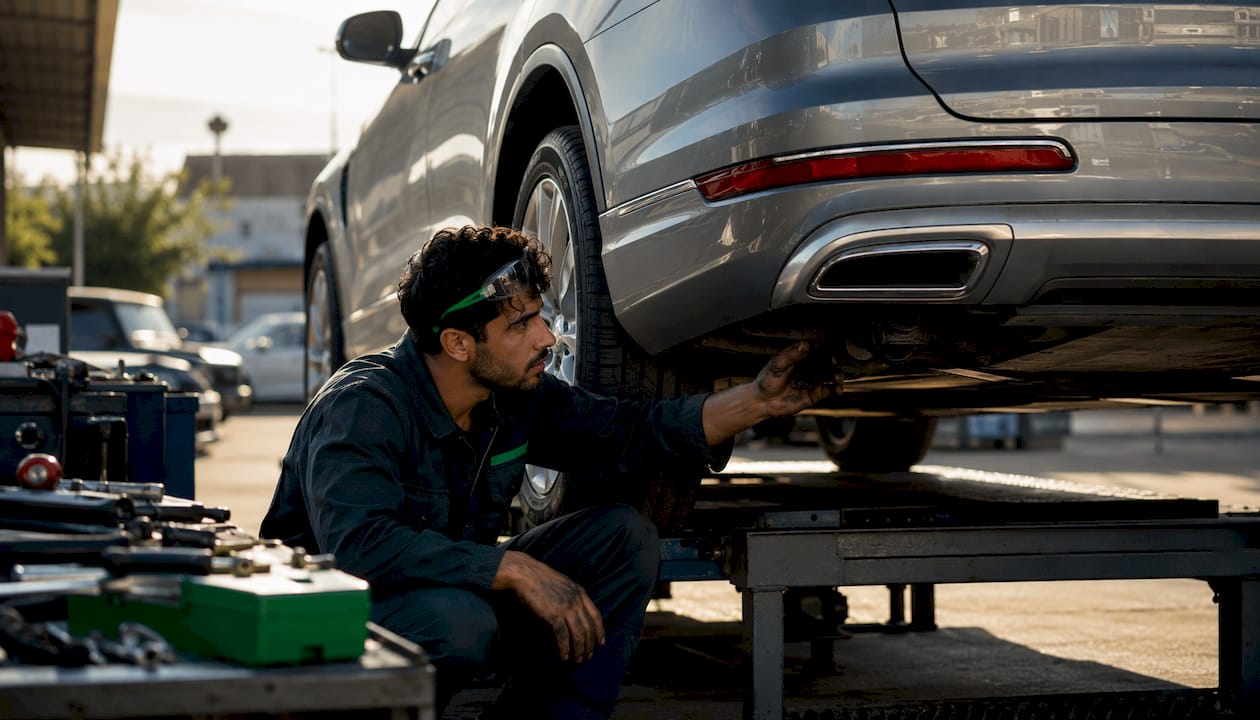
Vehicle standards follow a similar logic. Private fleets operate under scheduled maintenance programs, age restrictions, and periodic safety inspections. A chauffeur arriving in a vehicle with an open recall is not a scenario the operating company tolerates, because the vehicle is part of the company’s licensed fleet, not a personal asset.
Training is where the gap becomes most visible. Professional chauffeurs engage in advanced route planning, factoring in weather, traffic patterns, and security considerations before departure. They receive instruction in defensive driving and threat recognition. A rideshare driver follows GPS. Those are genuinely different skill sets.
Privacy and controlled access round out the picture. Verified driver identity, fixed pickup protocols, and in some cases nondisclosure agreements for executive clients create a controlled environment that an app-dispatched stranger cannot replicate.

Private transfer vs rideshare: how the safety features compare
The differences between private transfers and rideshare services break down clearly across six categories that directly affect passenger safety.
| Safety category | Private transfer | Rideshare service |
|---|---|---|
| Driver vetting and background checks | FBI fingerprint check, medical certification, DOT drug test | Name-based database search, limited lookback period |
| Security and threat response training | Defensive driving, threat recognition, emergency protocols | No formal safety training required |
| Insurance coverage and liability | Commercial policy, typically $1.5M+ minimum, full-trip coverage | Fragmented: personal policy plus contingent commercial, varies by trip phase |
| Vehicle safety and maintenance | Scheduled inspections, age limits, fleet-managed maintenance | Personal vehicle, no mandated inspection, open recalls possible |
| Privacy and controlled access | Verified identity, fixed pickup, confidentiality protocols available | App-matched stranger, variable pickup locations, no privacy controls |
| Reliability and professionalism | Licensed operator accountable for driver and vehicle standards | Independent contractor, platform bears limited operational responsibility |
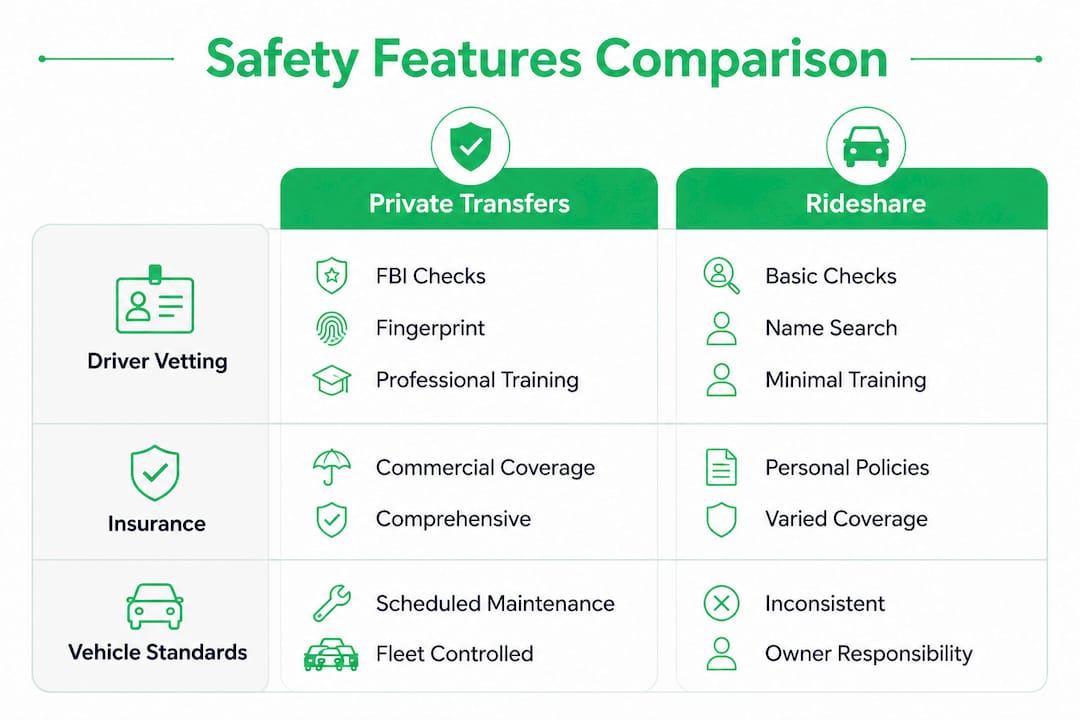
The chain of custody concept explains why the private transfer column holds together as a system. A licensed company maintains standards independently of the individual driver. If a driver fails a drug test or a vehicle misses an inspection, the company is accountable. In the rideshare model, accountability sits with the contractor, and the platform’s exposure is limited by its independent contractor classification.
Rideshare apps do offer features like GPS tracking, driver photos, and license plate verification. These are useful, but they address identification, not safety. Researchers have called this pattern “security theater” because the interface creates a sense of control without the underlying vetting, training, or insurance that would actually reduce risk.
Why safety-conscious travelers choose private transfers
The choice comes down to what you are actually buying when you book a ride.
Airport and corporate travelers face the clearest case. A missed flight or a no-show at a client meeting has real consequences, and the reliability of a professional chauffeur service is built into the operating model. Fixed pricing, confirmed vehicle assignment, and flight tracking mean the driver adjusts to your schedule, not the other way around.
Privacy matters more than most travelers admit. When you book a private transfer, you know who is picking you up before the car arrives. The driver’s identity is verified by the operating company, not just displayed in an app. For executives, families traveling with children, or anyone arriving late at night in an unfamiliar city, that distinction carries real weight.
The accountability structure also shifts the incentive. A professional chauffeur works for a licensed company that can lose its operating permit if standards slip. A rideshare contractor works for a platform that classifies them as an independent contractor. Those are different relationships, and they produce different behavior.
Scenarios where travelers consistently prefer private transfers include:
- Late-night airport arrivals in unfamiliar cities, where the risk of an unvetted driver is highest
- Corporate travel where reliability and confidentiality are non-negotiable
- Family trips where vehicle condition and driver professionalism directly affect comfort and safety
- VIP and executive transport where privacy protocols and threat awareness are part of the service
- Business travel where route planning and punctuality are treated as professional requirements, not afterthoughts
What federal data and expert analysis reveal about the safety gap
The federal record on rideshare safety is more detailed than most travelers realize, and it consistently points in the same direction.
The GAO’s vehicle recall audit found that nearly 1 in 6 rideshare vehicles had an open safety recall during the study period. Passengers have no visibility into this. The vehicle that picks them up could have an unresolved brake, airbag, or steering defect, and neither the driver nor the platform is legally required to disclose it.
Transportation security experts draw a direct line between this accountability structure and passenger safety. When a licensed company operates independently of the driver, every safety standard, from background checks to vehicle inspections, is enforced at the company level. The driver cannot opt out. In the rideshare model, the contractor decides whether to fix the recall, whether to disclose a health condition, and whether to follow safe driving practices. The platform sets guidelines but cannot enforce them the way an employer can.
The 45 states that require criminal background checks for rideshare drivers represent real progress, but the quality of those checks varies widely. Some states allow fingerprint-based FBI searches; others rely on name checks that miss records, contain errors, or cover only a limited time window. Professional chauffeur services operating under commercial licensing standards apply the more thorough check regardless of what state law requires.
The assault data from 2019 puts a number on what happens when those standards are absent. Approximately 4,600 serious sexual assault incidents across three platforms in a single year is not a fringe problem. It reflects a structural gap between a gig model and a regulated professional service, and it is the clearest argument for choosing private transfers when safety is the priority.
Key Takeaways
Private transfers are safer than rideshares because they operate under a system of commercial accountability that covers driver vetting, vehicle condition, insurance, and training as a unified standard rather than a set of individual contractor choices.
| Point | Details |
|---|---|
| Background check depth | Professional chauffeurs pass FBI fingerprint checks; rideshare drivers typically face only name-based searches with limited lookback periods. |
| Vehicle recall exposure | Approximately 16% of rideshare vehicles had open safety recalls as of August 2022, per U.S. GAO data. |
| Insurance floor | Licensed private car services carry commercial liability coverage with minimums typically starting at $1.5 million, applied consistently across the full trip. |
| Assault incident scale | Three rideshare companies reported approximately 4,600 serious sexual assault incidents in 2019, the only year all three published data. |
| Chain of custody | A licensed private operator enforces safety standards at the company level; rideshare platforms rely on independent contractors to self-regulate. |
Travel with a service built around your safety
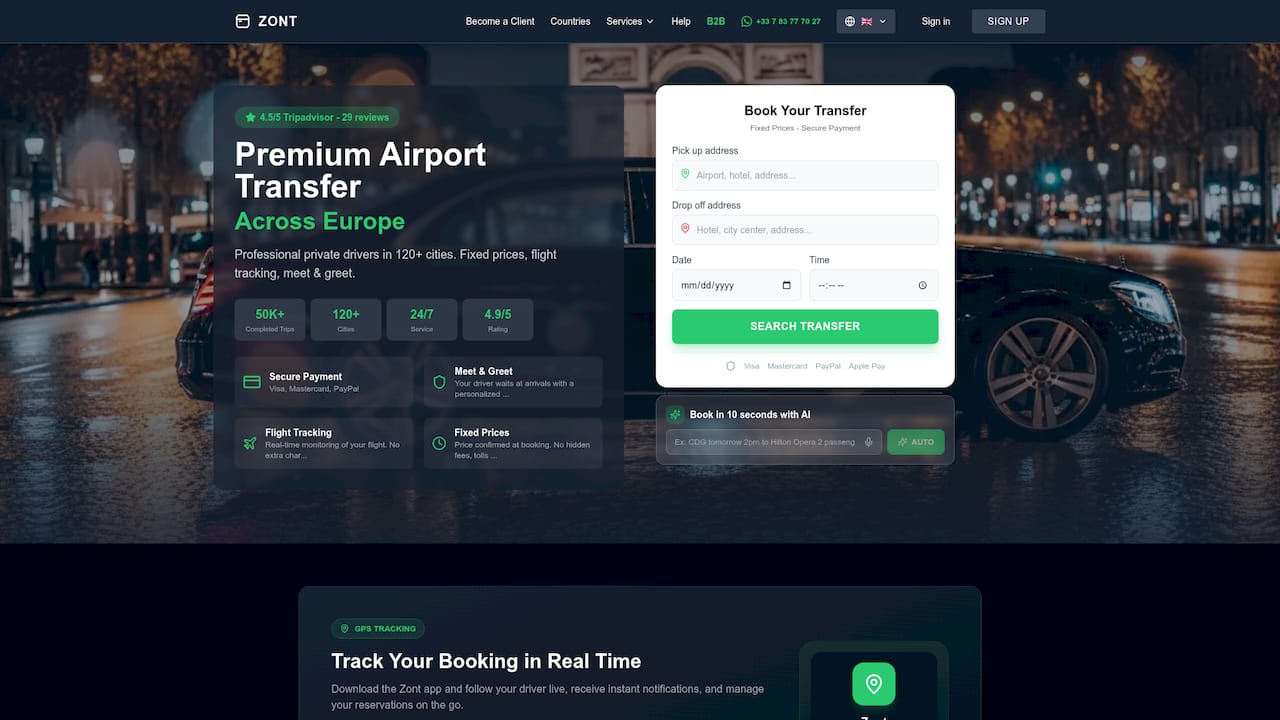
Zont Cab operates across more than 120 cities in Europe, with every trip backed by verified professional chauffeurs, commercial insurance, and real-time flight tracking. Fixed pricing means no surge surprises, and the meet-and-greet service means your driver is waiting when you land, not circling the terminal. With over 50,000 completed trips and a 4.5-star rating on TripAdvisor, Zont Cab delivers the accountability that rideshare platforms cannot match.