Choosing a Spacious Transfer for Kids: A Family Guide
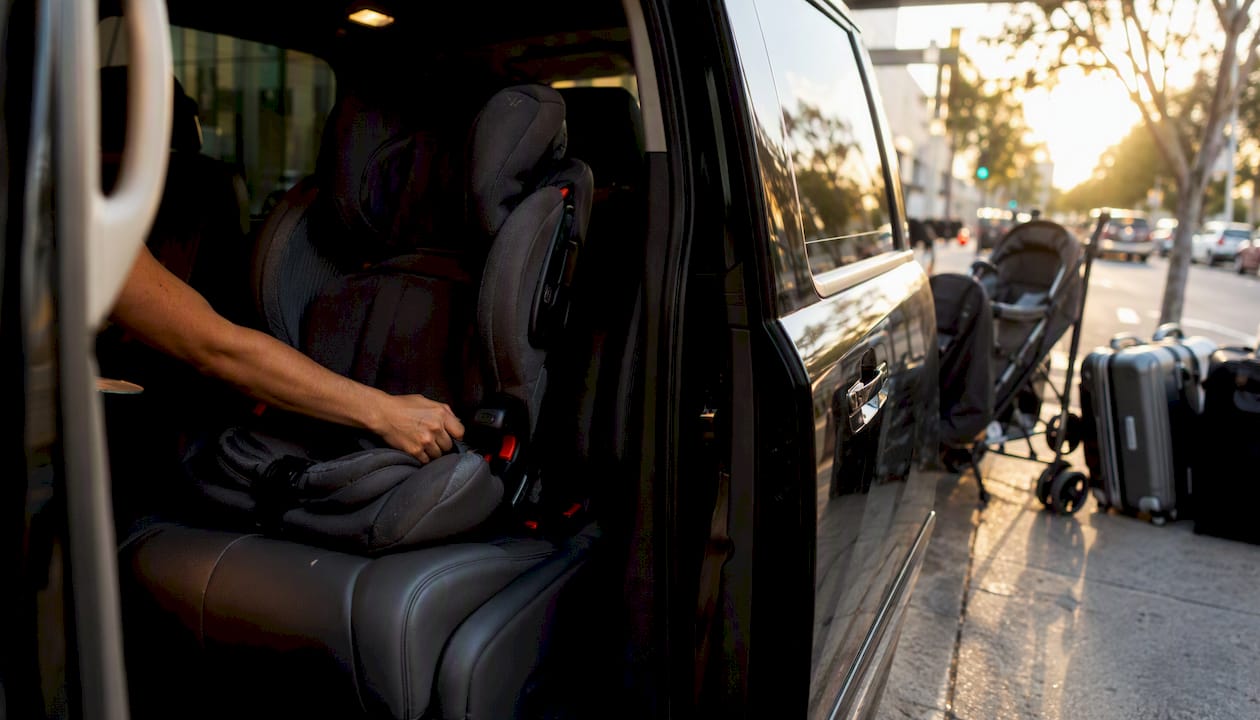
Book a prebooked minivan or 7–8-seat vehicle with captain’s chairs and confirm child restraint system (CRS) availability before you pay. That’s the short answer. The industry term for what you’re booking is a “prebooked private transfer,” and the vehicle category that actually delivers usable space for families is a minivan or a 7–8-seat vehicle with captain’s chairs and a dedicated cargo area. Three things to confirm before you reserve: the vehicle has enough cabin space for your CRS plus luggage, the provider can supply a safety-rated CRS with FAA/NHTSA labels, and a trained installer will fit it on arrival.
- Vehicle size: Confirm row-by-row seat width and cargo volume, not just the model name.
- CRS availability: Ask for the exact make and model, and verify it carries FMVSS 213 and FAA approval where applicable.
- Installer competency: Get written confirmation that a trained person will install the seat, not just hand it to you.
Pro Tip: Book if the provider confirms all three in writing. If they say “we’ll try to arrange a seat,” keep looking.
Key Takeaways
Choosing a spacious transfer for kids comes down to three verifiable commitments from your provider: the right vehicle, a labeled CRS, and a trained installer confirmed in writing before you pay.
| Point | Details |
|---|---|
| Vehicle type matters | Book a minivan or 7–8-seat vehicle with captain’s chairs; confirm row widths, not just model name. |
| CRS verification is non-negotiable | Require FMVSS 213 labeling and FAA-approved certification; get make and model in writing before booking. |
| Installer confirmation in writing | Ask for the installer’s name or qualification and written confirmation of professional installation at pickup. |
| Book 5–7 days ahead for multi-child trips | Standard transfers need at least 72 hours; special equipment or multiple CRS requests need 5–7 days minimum. For multi-child trips, book 5–7 days ahead. |
| Zont Cab for European family transfers | Prebooked minivans and 7-seat vans across 120+ cities, fixed pricing, flight tracking, and meet-and-greet service. |
Table of Contents
- What safety rules apply when choosing a spacious transfer for kids?
- Which vehicle types give families genuinely usable space?
- How should you handle car seats: bring your own or rent one?
- What questions should you ask before booking a family transfer?
- What should you do on the day of travel?
- Why a premium provider changes the family transfer experience
- Zont Cab makes family-ready transfers bookable in minutes
- Sources
What safety rules apply when choosing a spacious transfer for kids?
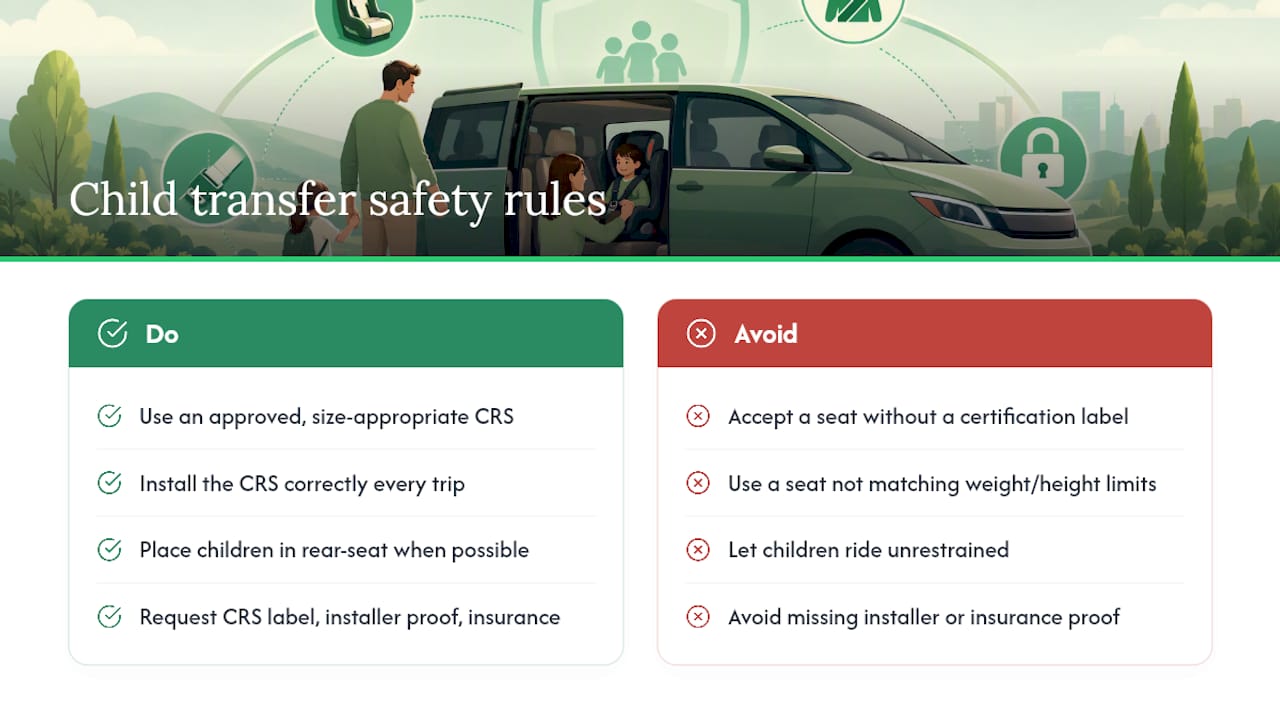
U.S. parents should hold any transfer to the same standard as their own car: an approved, size-appropriate CRS installed correctly for every child, every trip. That’s not overcaution. The CDC Yellow Book identifies vehicle-related injuries as one of the leading causes of death for child travelers and recommends proper restraint and rear-seat placement whenever possible.
The FAA’s Kids’ Corner guidance urges securing children in an approved CRS for the full duration of a flight and specifies labeling requirements for seats used on aircraft. The same diligence applies to ground transfers: if you’d insist on a labeled, correctly installed seat on a plane, there’s no reason to accept less in a car.
On the ground, FMVSS No. 213 sets the federal baseline. Any CRS sold for motor-vehicle use must meet minimum design standards, carry a certification label, include printed installation instructions in English, and specify the weight and height limits the seat is designed for. When a provider offers a “car seat,” ask to see the label. If they can’t show you one, that seat doesn’t meet federal standards.
Child Safety Link notes that children in taxis and private transfers face the same crash risks as those in personal vehicles, and that a properly used restraint system can substantially reduce injury risk and death. Trust signals to request from any provider: a photo of the CRS label, documentation of installer training, and written confirmation of insurance covering child passengers.
Which vehicle types give families genuinely usable space?
For most families, a minivan or a 7–8-seat vehicle with captain’s chairs and a separate cargo area delivers the most practical space. Passenger vans can work for large groups, but their bench-seat layouts vary widely and often make CRS installation awkward.
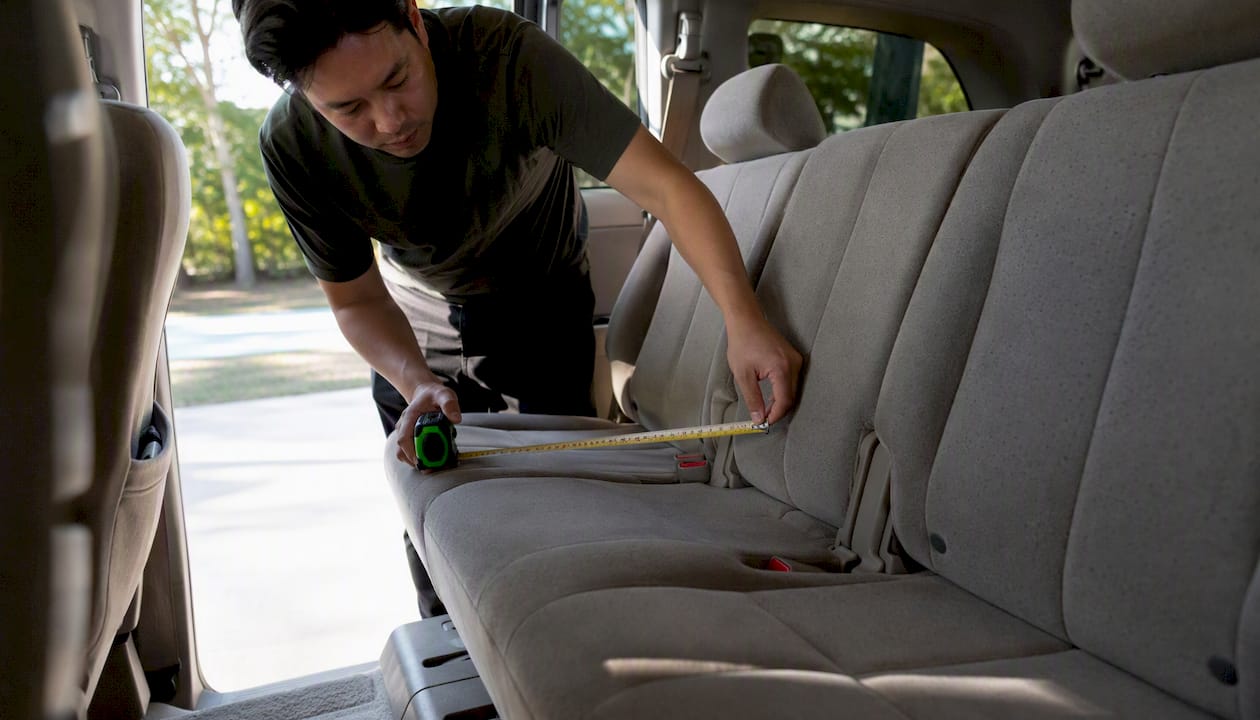
“Usable space” means more than legroom. It means enough width in a seat row to install a rear-facing CRS without the seat pressing against the door, enough floor clearance to maneuver the seat during installation, a dedicated cargo area that keeps strollers and luggage away from the passenger cabin, and enough row width to fit two car seats side by side when needed.
Here’s how vehicle choice maps to common family scenarios:
| Family scenario | Minimum vehicle type |
|---|---|
| Infant + stroller + 1–2 adults | Minivan or 7-seat SUV with captain’s chairs |
| Two toddlers in rear-facing seats | Minivan (wider row 2 and row 3 critical) |
| Older kids needing booster space | 7-seat SUV or executive van |
| Multi-child + large luggage load | Passenger van or |
| minivan transfer with separate cargo hold |
An executive 7-seat vehicle suits families prioritizing comfort and moderate luggage. A passenger van fits large groups but requires explicit confirmation of seat configuration. A minivan, particularly one with sliding rear doors, tends to be the most CRS-friendly layout because it gives you room to work during installation.
Always ask for seat widths and row configurations by number, not just the model name. A “7-seat SUV” can mean very different things depending on the trim and configuration.
How should you handle car seats: bring your own or rent one?
Bring your own CRS when possible. You know its history, you know it fits your child, and you know it hasn’t been in a crash. If you rent one from a provider, get the exact make and model in advance, verify the FMVSS 213 label and any FAA-approved label, and request written confirmation of professional installation before you arrive.
Healthychildren keeping infants and toddlers in a rear-facing seat as long as possible and arranging a properly certified seat for both air and ground travel. That “arranging” step is the one most parents skip until the day of the trip.
Here’s a practical installation checklist to run through at booking and on arrival:
- At booking: Ask for the installer’s name or qualification and request written confirmation that the seat will be installed, not just supplied.
- Before travel day: Request photos of the CRS label (FMVSS 213 certification and FAA label if applicable).
- On arrival: Check that the seat is installed before loading children. Apply the 1-inch rule: the seat should not move more than 1 inch at the belt path when you push it firmly.
- Confirm instructions: The printed installation guide should be in the vehicle. If it’s missing, that’s a red flag.
- Special equipment: Booster seats are not approved for aircraft use, but they are appropriate for ground transfers for children who have outgrown a harnessed seat. Portable cribs and travel beds require separate cargo space; confirm this at booking.
Request your CRS at least 48–72 hours before travel. Reconfirm the day before. At handoff, inspect the seat yourself before your child is buckled in.
Pro Tip: Download the car-seat manufacturer’s installation PDF to your phone before travel day. If the driver’s installation looks off, you can pull up the correct steps immediately without an internet connection.
What questions should you ask before booking a family transfer?
Use verifiable criteria, not vague promises. The questions below are designed to get definitive answers, not “we’ll do our best.”
Questions to ask before you pay:
- “Can you supply a [specific brand/model] CRS with FMVSS 213 and FAA-approved labels, and install it upon arrival?”
- “What is the internal seat width of row 2 and row 3?”
- “Is the seat next to my child guaranteed to be free, or can you guarantee adjacent seating?”
- “Do you carry insurance that covers child passengers and installer liability?”
Red flags to walk away from: a provider who can’t name the CRS make and model, offers no photos or specs, uses “will try” language about installation, refuses to confirm seat adjacency, or won’t provide written confirmation. A transfer red-flags checklist can help you spot these patterns before you book.
Pricing factors to expect: vehicle size, number of additional seats, CRS rental fee, installation fee, flight-tracking or wait-time charges, and stroller or oversized luggage handling. Get an itemized quote. For evaluating transfer providers on safety records and certifications, look for documented training, insurance certificates, and customer reviews that specifically mention family travel.
Booking timeline: Reserve at least 72 hours out for standard family transfers. For multi-child trips or special equipment, book 5–7 days ahead. Reconfirm 24 hours before travel and again the morning of pickup.
What should you do on the day of travel?
Arrive at the pickup point a few minutes early. Your first task is to confirm the CRS and the installer, not to load luggage.
Step-by-step on pickup day:
- Confirm the driver’s identity and vehicle plate against your booking confirmation.
- Inspect the CRS label and installation before your child is seated.
- Apply the 1-inch test at the belt path. If the seat moves more than 1 inch, ask the driver to reinstall it.
- Load strollers and luggage in the cargo area, never in the passenger cabin where they can become projectiles.
- Seat infants and rear-facing seats away from active airbags. Middle rear seats are generally the safest position when a CRS fits there correctly.
- Keep the provider’s contact number open in your app during transit. If anything looks wrong after departure, you have a direct line.
For stroller logistics specifically, a family airport transfer guide covers how to fold, bag, and load different stroller types without damaging them or blocking emergency exits.
Pro Tip: Seat your youngest child first, then load luggage. Reversing that order means a child is unbuckled and standing near an open vehicle door while bags are being loaded.
Why a premium provider changes the family transfer experience
Most of the checklist above is hard to execute with a provider who has no documented CRS process. A premium prebooked transfer provider removes that uncertainty by building CRS availability, professional installation, and vehicle selection into the booking workflow rather than treating them as special requests.
What that looks like in practice: flight tracking so the driver adjusts for delays before you land, guaranteed vehicle type (not “subject to availability”), documented CRS policy with labeled seats, and fixed pricing that includes all fees upfront. These aren’t luxury extras for families. They’re the baseline that makes the checklist above possible to verify.
Zont Cab makes family-ready transfers bookable in minutes
Families traveling through Europe need a transfer provider that answers the checklist, not one that improvises on arrival. Zont Cab offers prebooked private transfers across 120+ cities in Europe with premium vehicles including minivans and 7-seat Mercedes V-Class vans, real-time flight tracking, personalized meet-and-greet service, and fixed pricing with no hidden fees. Over 50,000 completed trips and a 4.5-star TripAdvisor rating reflect a consistent track record with families and business travelers alike.
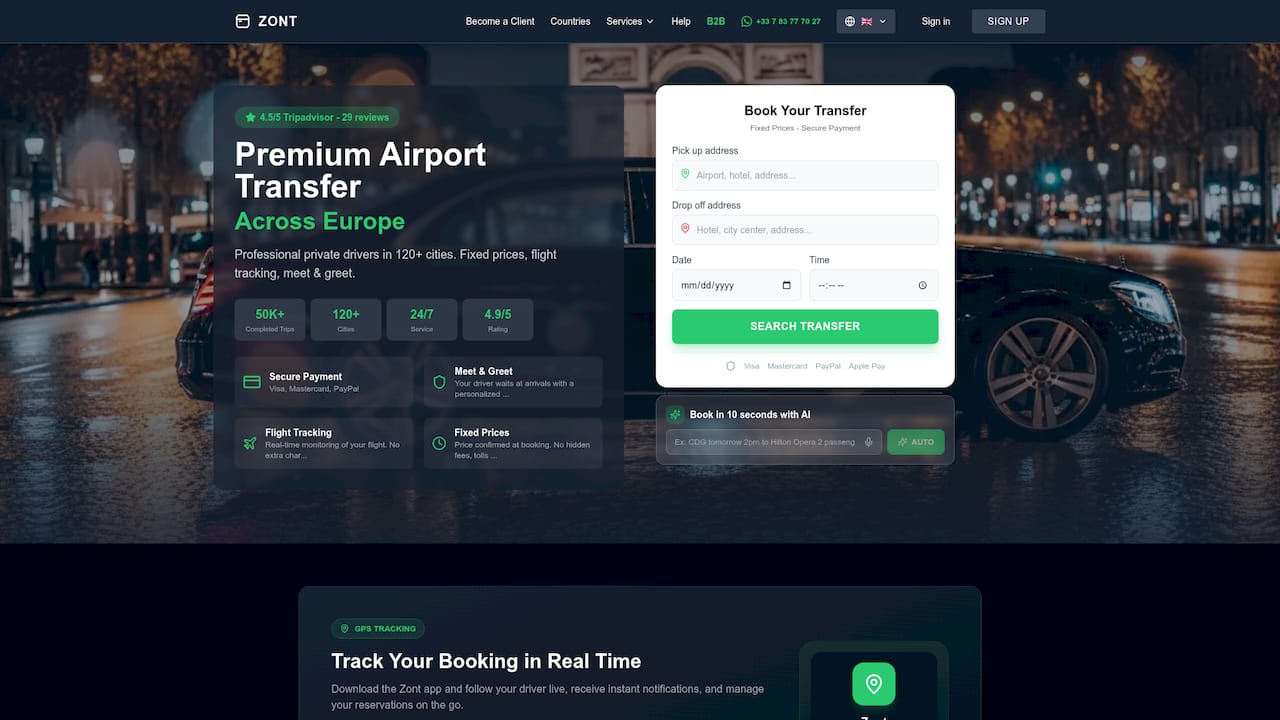
When you book, use the notes field to specify your CRS requirements, the number of children, stroller dimensions, and any special equipment. Zont Cab’s 24/7 support team confirms vehicle configuration and installer details before your travel day, so you arrive knowing exactly what to expect. Browse family-ready transfer options across Europe and book with fixed pricing today.
Sources
- Kids’ Corner | Federal Aviation Administration
- Healthychildren
- Traveling safely with infants and children | CDC Yellow Book™
- 49 CFR § 571.213 - Child restraint systems; Applicable unless a vehicle or child restraint system is certified to § 571.213b. | Electronic Code of Federal Regulations (e-CFR) | US Law | LII / Legal Information Institute